...accepting we, still, don’t know as much as we think we do accept that we,…
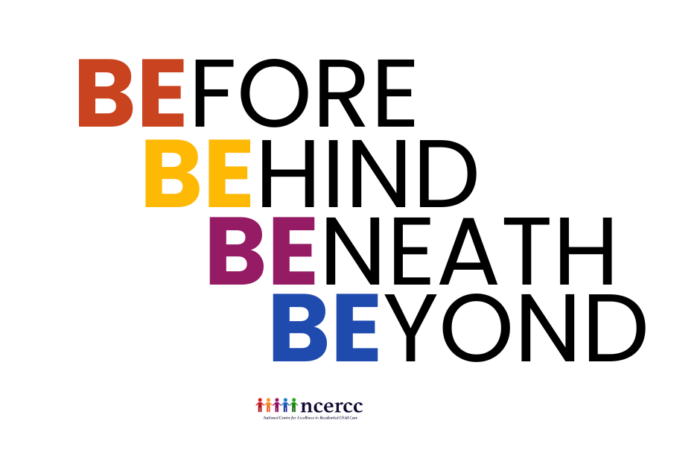
Before Behind Beneath Beyond: Residential Child Care: giving the public what it didn’t know it wanted
Recognising the reality of the value and contribution of Residential Child Care offers society
While the public often “wants” visible order, strict discipline, or immediate compliance (often viewed as “good results”), what children in care actually “need” is an environment that prioritises healing. This involves looking beyond surface-level actions to understand the child’s complex inner world.
Current behaviour is often the only part visible to the public. It is frequently seen as “bad” or “annoying,” but in Residential Child Care, it is viewed as communication. Whilst managing behaviour Residential Child Care is using the communication as a diagnostic tool to understand what the child is struggling to express.
To provide what the public “didn’t know it wanted”, a truly rehabilitated and emotionally secure young person, practitioners must apply a framework that moves through these distinct lenses:
- Before: This acknowledges the trauma, abuse, or neglect a child experienced before entering the home. The public may only see a “troubled” child, but care providers see a history of repeated broken trust in family-based settings, that shapes a child’s current worldview.
- Behind: This looks at the underlying unmet needs or emotions driving a child’s actions. While the public might see “defiance,” a practitioner sees the fear for survival behind the mask. Effective care addresses these root causes.
- Beyond: This focuses on the child’s future and their untapped potential. It means looking beyond their current struggles and providing the unconditional care and boundaries needed for long-term emotional and psychological stability. It is about preparing them for an adulthood where they can thrive, which is the ultimate goal the public “didn’t know it wanted”.
- Beneath: Completes this framework by addressing the internal, often unconscious, landscape of the child. While “Behind” looks at the immediate drivers of an action, “Beneath” focuses on the foundational identity and physiological state of the child, the core-belief of the child, the deeply rooted ‘wiring and firing’ as a result of past experiences.
The Public’s Perspective: The public often wants a child to “choose” better behaviour or show “willpower.” They assume the child has the same emotional regulation tools as a peer who grew up in a stable home.
The Caring Reality: Practitioners look beneath the surface to find a nervous system stuck in a permanent state of “fight, flight, or freeze, ” (NCERCC have added more F’s – publishing soon – to show and engage with the complexity of multiple, co-occurring and interacting needs). Beneath the behaviour is a child who has felt fundamentally unlovable or unsafe.
The Application: Care that addresses what is “beneath” focuses on co-regulation. Instead of just talking about feelings (top-down), carers use a secure, emotional, close parenting relationship which consciously provides consistent presence through sensory activities at the right intensity and rhythm, to soothe the child’s emotional, psychological and social understanding developing first competence then skill.
By addressing what lies beneath, Residential Child Care provides the public with a young person who isn’t just “behaving” because they are afraid of consequences, but who is genuinely integrated and regulated from the inside out.
By shifting the focus from “giving what the public wants” (compliance) to “what it didn’t know it wanted” (deep, structural healing), Residential Child Care becomes a transformative rather than, merely, a placement service.
Related Posts