The forthcoming DfE residential child care workforce professional development review report is highly likely to…
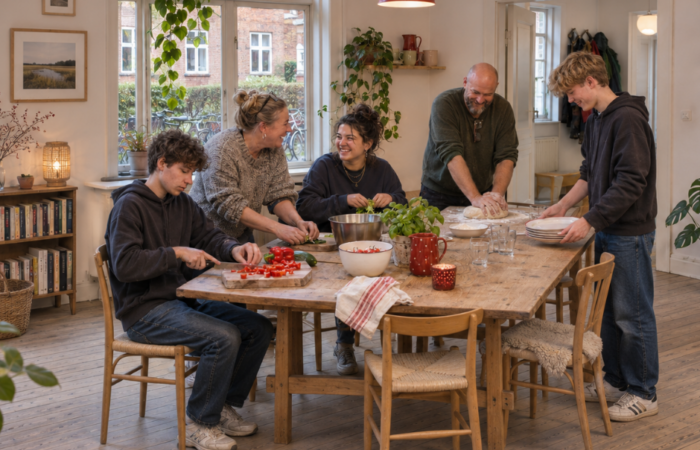
A short briefing about Social Pedagogy and Residential Child Care in Denmark
It is important that the current residential child care sector in England know what is being talked about when the Minister and others use the words ‘social pedagogy’.
NCERCC have (hastily) put together this introduction to care and residential child care in Denmark. The information has been collated from Danish government sources.
If there are any errors in our understanding, we will correct them. It is important we all know what we are talking about.
Why so sensitive?
Recently The Guardian newspaper included an article.
English children’s homes are in crisis. Does Denmark hold the answers? | Children | The Guardian.
As there were many areas needing attention it was necessary to respond
The NCERCC response and letter to a recent article in The Guardian newspaper – NCERCC
The article advised that Danish children’s homes are often cited as the gold standard of children’s residential care globally. The Minister was taken to Denmark (it should be noted some 20 years after NCERCC took a Parliamentary delegation) to “see how its children’s homes operate and what can be exported back to England, as part of a Department for Education review into how the sector can be improved”.
What is Social Pedagogy?
From Thempra Social Pedagogy – ThemPra Social Pedagogy CIC
Social pedagogy: not a method, not something you do to people; it is a way of being with them.
Social pedagogy is sometimes described as ‘education in the broadest sense of the term’, with a particular focus on learning in everyday life. This distinguishes it from formal education: social pedagogy happens in the moments between planned activities, in conversations over a shared meal, in the way a practitioner responds when something goes wrong.
This is why social pedagogy can enhance rather than replace many approaches frequently used in UK and Irish practice – such as trauma-informed practice, restorative approaches systemic practice, strengths-based models and person-centred approaches. Social pedagogy provides the ethical and conceptual foundation on which these methods are built and from which they gain their deeper purpose.
To find out more about Social Pedagogy see
SPPA SPPA – Social Pedagogy Professional Association (see especially Social Pedagogy Charter – SPPA and Explore Free Resources on Social Pedagogy for Educators)
Thempra (see especially Key Concepts: Diamond model: Haltung: 3 P’s: Learning zone: Relational: Common Third) Social Pedagogy – ThemPra Social Pedagogy CIC
UCL/Thomas Coram Research Unit Courses | UCL Institute of Education (see especially Towards a social pedagogic approach for social care)
Kingston University Working with Children & Young People: Social Pedagogy BA (Hons) | Kingston University London
UCL Press’ International Journal of Social Pedagogy. International Journal of Social Pedagogy
If you read one thing – start here: Social pedagogy and Denmark.
Mette Lausten has posted her chapter in the book Revitalizing Residential Care for Children and Youth, Residential Care for Children and Youth in Denmark”.
(PDF) Residential Care for Children and Youth in Denmark
Reading Mette Lausten and reflecting on working with social pedagogy colleagues for over 2 decades NCERCC is struck by the closeness of theory and practice of Danish and English homes that is existing now. It used to be said ‘when it is the same it is different’, it is still so, a work in progress, but circumstances have changed. Now similarities are apparent.
Reading the chapter and it is difficult to understand the harshness of the criticism of English homes made by the Minister recently. There may be more involved in his and others comments than objective observation. Not only does England possess the approaches and homes as Denmark it many have many more. The diversity of English residential child care is under-appreciated.
Taking forwards the dialogue will need an appreciative inquiry approach and deep study of the 2 countries undertaken by people with long experience and know-how as those without these vital prerequisites may not see the similarity, difference, and nuance. Thus, the work needs to be by action researchers, managers perhaps colleague to colleague as NCERCC was working to achieve 2 decades ago, not ministers, researchers, commentators.
Some insights into children’s services, care and Social Pedagogy in Denmark
Totals in out of home care
Overall, approximately 1% of all children and young people in Denmark (roughly 13,500 to 14,000 individuals aged 0–22) are placed outside their home at any given time.
A big difference in numbers
Around 62% to 65% of placed Danish children live in foster care, while roughly 32% to 38% live in residential care or institutional settings.
Statistics Denmark categorises out-of-home placements (anbringelser uden for hjemmet) into 4 distinct groups:
- Foster Care (Plejefamilie).
Accounting for roughly 62%–65% of all placements, this category includes general foster families (almene), reinforced foster families (forstærkede), specializlsed foster families (specialiserede), and kinship/network foster care (netværksplejefamilie). - Residential Institutions (Døgninstitution).
These traditional institutions provide for children with more severe behavioural, psychological, or social needs and include open wards, partially closed wards, and secure settings.
England cares for such needs in small homes with a social care focus not medical though other professions may be integrated. The health wording is to be noted in the Danish descriptions.
- Socio-Pedagogical Homes (Opholdssted). These are smaller, specialised group homes or residential facilities run by trained social pedagogues, often tailored to specific youth groups or developmental challenges.
Similar in many respects to English children’s homes.
- Independent & Boarding Options (Efterskole, eget værelse mv.). Accounting for a smaller share of older youths, this covers placements in boarding schools (efterskole) with student dormitories or supported independent apartments.
England uses boarding school provision in rare cases often for example where parents may be unable to care for longer periods (eg hospitalisation). This is rarely taken into account as residential child care.
England now has Supported Accommodation, though created to make a split with residential settings increasingly it is being considered as a residential sector, which may lead to inclusion in the Quality Standards.
Key Differences of Danish Foster Care and Residential Child Care
Over the past four decades, Danish child welfare policy, governed by the Child’s Act (Barnets Lov), has shifted heavily toward family-based care, dropping the share of residential care from 56% in 1982 down to roughly 32%–38% today.
Recent Trends in Statistics Denmark Data
- Voluntary vs. Involuntary Placements. According to recent Statistics Denmark releases, involuntary placements (anbringelser uden samtykke) in foster families increased by nearly 13% between 2020 and 2025, while voluntary foster placements (med samtykke) saw a slight decline.
- Growth in Socio-Pedagogical Homes.
While traditional large institutions have declined over the decades, voluntary placements in smaller socio-pedagogical group homes (opholdssteder) rose by 16.7% between 2020 and 2025 to accommodate youths requiring structured professional support. - Municipal Variation.
Even though national law applies equally across Denmark, placement rates and the ratio of foster-to-residential care vary noticeably across Denmark’s 98 municipalities due to local budgets, assessment cultures, and family recruitment capacity.
Length of stay.
Overall.
- Ages 0 to 17 years: The average length of stay for children leaving out-of-home care in this group is 2.3 years.
England is generally much shorter, and according to the Minister projections for the future likely to shorter still.
- Ages 18 and older: The average length of stay increases to 4.3 years, with roughly 30% of care leavers in this older group spending 5 or more years in care.
England moves children to adult care at 18.
Long-term residential examples
Individual high-stability therapeutic or family-style residential facilities (such as specialised long-term models) report significantly longer average stays, averaging around 13 years, in order to foster continuous relationships and low placement breakdown rates.
These words need to be placed alongside the Minister’s rhetoric of enduring life-long relationships, and his desire for residential care to be used for short periods.
The duration of a child’s stay in a Danish residential facility (døgninstitution or opholdssted) varies significantly depending on their age, legal status, and individual needs.
Average Length of Stay
- Younger care leavers (ages 0–17)
Children who leave out-of-home care before turning 18 stays for an average of 2.3 years. - Older care leavers (ages 18+)
Those who remain in care until adulthood stay for an average of 4.3 years, with roughly 30% spending 5 or more years in care. - Overall placement stability
Across all out-of-home placements in Denmark, around 45% to 50% of children remain in care for more than two years.
Breakdown by Type of Residential Stay shows diverse purposes lead to diverse durations falling into three general patterns:
- Short-Term & Acute Care (Days to a few months): Emergency institutions (akutinstitutioner) and observation homes provide immediate shelter during family crises or while municipalities assess a child’s long-term needs.
- Medium-Term Therapeutic Stays (1 to 3 years): Many teenagers placed in socio-pedagogical group homes (opholdssteder) or boarding schools (efterskoler) stay for a set period to stabilize behavioral, educational, or mental health challenges before returning home or moving to supported independent living.
- Long-Term Residential Care (5 to 13+ years):
For children with severe trauma, complex psychiatric needs, or disabilities who cannot live in a foster family, specialized long-term institutions offer permanent stability until adulthood. Individual family-style residential models report average stays of up to 13 years.
Standard age limit: Standard out-of-home placements end when a young person turns 18. As England
- Extended support up to age 23:
Under Denmark’s Child’s Act (Barnets Lov), young people who still need support can continue living in their residential facility or transition to supported housing through aftercare (efterværn) until they turn 23.
Unheard of in England where Staying Put applies to fostering only. Children from residential care have had Staying Close curtailed and frequently move to Supported Accommodation or Independent Living from 16.5 years onwards without continuous care being available, often seemingly irrespective of needs or wishes.
How Specific Danish Homes Structure Their Care
(Note: this type of planned environment has been advocated for for decades but resisted by governments and local authorities).
Once a Barnets plan is approved, municipalities match the child to a residential home (børne- og ungehjem) whose daily structure fits the child’s specific clinical and relational profile.
For decades this has been the proposal of experts including NCERCC and has been resisted by DfE and local authorities despite it being known to be the most effective use of settings, and efficient use of finance. A needs-led sector would be planned environment with the granularity to meet multiple, co-occurring, interacting high level needs. See This is the most important research report regarding children in care for decades – it is required reading – NCERCC and Action essential on this ‘must read’ about multiple co-occurring intersecting needs – NCERCC
- Attachment Trauma & Emotional Dysregulation (Milieu Therapy Model).
- Structure: Homes specializing in complex trauma: Fonden Føniks or traditional opholdssteder, operate like large, structured family homes for 5 to 8 residents.
- Key Mechanisms: Care is built around milieu therapy (miljøterapi) and neuro-affective developmental psychology. Every child is assigned two dedicated primary pedagogues (kontaktpædagoger) who manage daily routines, school transitions, and family contact. Instead of punitive behaviour charts, staff use co-regulation, predictable mealtimes, and shared outdoor activities to repair attachment security.
This might be understood as having similar features to English therapeutic child care, planned environment where every feature including relationships, food, furniture is mindfully focussed for the children’ s development, recovery and growth.
- Autism & Severe Sensory Overload (Low-Arousal & Shielded Units).
- Structure: Facilities approved for autism and neurodevelopmental complexity divide buildings into shielded apartments or small wings (skærmede enheder) housing just 2 to 4 young people, often with private entrances and bathrooms.
- Key Mechanisms: Staff use Low Arousal methods and visual communication systems. Daily schedules are mapped out visually hour-by-hour, sensory triggers (noise, lighting, unexpected changes) are strictly minimized, and demand levels are adjusted dynamically to prevent meltdowns.
England has such homes.
- Acute Psychiatric & Diagnostic Observation (Short-Term Assessment Homes).
- Structure: Glostrup Observationshjem provide intensive 3-to-6-month residential placements when a child’s needs are too complex or unclear for a standard home.
- Key Mechanisms: Multidisciplinary teams combine social pedagogues, in-house psychologists, and consulting child psychiatrists, observe the child 24/7 across living and internal school settings. They produce a detailed psychological-pedagogical roadmap that guides the municipality’s long-term placement match.
England once had such observation and assessment homes but discontinued them. The advantage over assessment in the community is the staff have experience with multiple, interacting, high level, co- occurring needs that differ from needs more commonly encountered in families and family-based care or community-based CAMHS. For these the focus may be more on sustaining family-based care through short-term systemic social work or CAMHS provided CBT-like approaches.
England no longer matches needs to placements at the granular detail of Denmark and does not commissions what is needed but procures from what is made available.
Meeting emotional need is often curtailed by economic decisions of the local authority or the investment a provider is prepared to make, often preferring to remain at generic mainstream level of intensity to maximise admissions. Specificity of care is rare in England.
- Severe Outward-Reacting (Udadreagerende) & High-Risk Youth (1-to-1 Solitary Projects).
- Structure: For teenagers with severe emotional needs and/or behaviour seen as challenging, or trauma-driven panic/anxiety, who cannot function in a peer group, providers set up individualised single-occupancy projects (enkeltmandsprojekter), often in rural cottages or standalone annexes.
- Key Mechanisms: Staff work in rotating 24-hour or 48-hour shifts (1:1 or 2+:1 staffing) to ensure total relational continuity without constant shift handovers. Daily life centres on physical activities, practical workshops, outdoor adventure activity, and gradual reintegration into education.
These are similar to the solo/ DOLS homes and settings in England, often pop-up and unregistered. Care in through intensive staffing rather than expertise.
How Specific Formulation/Diagnoses Affect Placement Matching in Denmark
In Denmark, a formal diagnosis is not legally required to place a child in residential care under Barnets lov (the Children’s Act), as placements are based on overall functional need (funktionsevne). However, once a child has an assessment of need it directly dictates which facilities can legally accept them via the national portal, Tilbudsportalen.
- Regulatory target-group approval (Målgrupper). Every Danish residential home is inspected and licensed by Socialtilsynet for specific target groups. A home licensed only for “attachment and neglect” (tilknytningsforstyrrelse og omsorgssvigt) cannot legally admit a child whose primary challenge is severe autism unless it holds dual approval and demonstrated staff competence.
- Autism Spectrum Disorder (ASD). Children with autism are matched to low-arousal, highly predictable environments (skærmede enheder). Matching focuses on sensory load, visual structure and small peer groups (often 4 to 6 residents) to prevent sensory overload.
- ADHD and Externalising Behaviour (Udadreagerende adfærd). When ADHD is paired with impulsivity or outward aggression, municipalities look for homes with high staff-to-child ratios, clear external boundaries, and active physical/recreational routines. If medication is involved, the home must also be approved for medical administration and psychiatric collaboration.
- Severe Attachment Trauma and Developmental Trauma. Children with Reactive Attachment Disorder (RAD) or complex relational trauma are matched to homes specializing in neuroaffective developmental psychology (neuroaffektiv udviklingspsykologi) or milieu therapy (miljøterapi). Rather than rigid behavioural rules, these placements prioritize primary-carer (kontaktpædagog) stability and low staff turnover so the child can safely rebuild trust.
- Dual Diagnoses (multiple, co-occurring, interacting, high level i.e like English profile). When autism or ADHD overlaps with severe attachment trauma, a very common profile in looked-after children, matching becomes significantly more selective. Municipalities must find homes approved for combined neurodevelopmental and psychiatric complexity, which automatically pushes the placement into intensive and expensive category.
Assessment of need/ screening/profiling
In Denmark, a børnefaglig undersøgelse (child welfare assessment) is a requirement to be conducted by a municipality under the ‘Children’s Act’ (Barnets lov). It is mandatory whenever a residential placement is being considered or in severe, complex cases involving abuse or acute developmental risk.
By law, the assessment must be completed within four months and produces the formal evidence base used by a municipal placement committee (visitationsudvalg) to commission and match a residential care home.
How Municipalities Conduct a Børnefaglig Undersøgelse
Under Barnets lov municipalities use a tiered entry system before launching a full assessment:
- Step 1: Screening and Narrow Scoping (§§ 18–19). When a concern or referral (underretning) arrives a social worker first screens existing records. For minor issues, they may do a narrow check (afdækning), whereas severe or complex SEMH/SEBD cases move straight to a full assessment.
- Step 2: Holistic domain mapping. Social workers typically consider challenges and resources across six areas:
- The child’s overall development and behaviour.
- Family relationships and parenting capacity.
- Schooling and learning environment.
- Physical and mental health.
- Leisure activities and friendships.
- Wider family and social network.
- Step 3: Multi-Agency Statements and Clinical Testing. The municipality gathers written statements from professionals who already know the child, such as teachers, health visitors, and child psychiatrists (Børne- og Ungdomspsykiatrien). If needed under the municipality commissions a clinical psychologist or medical doctor to conduct cognitive, attachment, or psychiatric evaluations.
- Step 4: Direct Child Participation. Danish law grants children strong participatory rights. Social workers must hold direct, age-appropriate conversations with the child, who has the right to bring a trusted adult (bisidder). Children aged 10 and older hold formal legal status (partsbeføjelser) in placement decisions.
- Step 5: Placement Committee (Visitationsudvalg) & Child’s Plan (Barnets plan). Before finalising the report, parents and youth aged 15+ review the draft to submit comments. The social worker then presents the 5–20 page report to a municipal visitation committee (comprising managers, legal advisors, and team leaders), which approves the budget and drafts Barnets plan (the statutory care plan outlining concrete goals for the residential home).
Related Posts