...accepting we, still, don’t know as much as we think we do accept that we,…

A world away from where we are now – insight into Residential Child Care in New Zealand
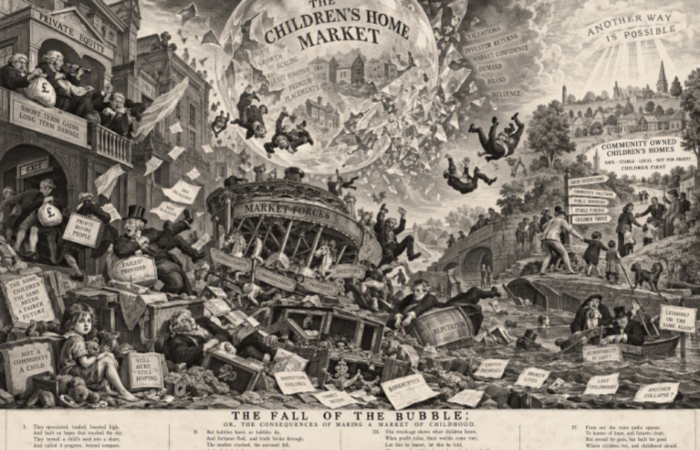
New Zealand operates on a model (civic and bicultural) that completely rejects commercial, for-profit extraction in child welfare, treating the care of children as a core public and cultural responsibility.
- Governance and Framework: The system is led entirely by the state via Oranga Tamariki (Ministry for Children). Its statutory mandate is driven by the Oranga Tamariki Act 1989, which prioritises the child’s cultural connection and family structure.
- Complete Prohibition of Profit: Private-equity and corporate providers are excluded from the child welfare landscape. Instead, capacity is built entirely through public funding allocated to state operations or trusted community partners.
- Bicultural and Community-Led Provision: New Zealand’s children’s homes focus on smaller, localised, relational environments:
- State Care and Protection Residences: Highly regulated, state-run facilities reserved for youth with high therapeutic or safety needs.
- Youth Justice and Care Community Homes: Small, localised 3-to-5-bedroom houses.
- Iwi and Māori Partnerships: community homes run directly by indigenous iwi (tribes), hapū (sub-tribes), or Māori social services. This system uses cultural frameworks like Kaupapa Māori to keep children rooted in their ancestral lineage (whakapapa) and community.
- Non-Government Organisation collaborations: Non-profit charities are contracted to run supported accommodation, operating strictly under service agreements where surplus funding is only reinvested directly into care.
- New Zealand’s Pay Parity: With profit legally removed, a “wage floor” operates. Non-profit NGOs and Iwi authorities operating community homes work under strict state contract rules. Funding frameworks are tied to public sector pay equity agreements. This ensures residential child care workers receive wages aligned with public social service benchmarks.
- Relational Stability: While the sector still faces systemic structural pressures, the removal of profit retention is anchored in two ways:
- Career Pathways: Clear, state-backed training frameworks and salary progression mean workers treat residential care as a viable long-term career rather than a transient, minimum-wage job.
- Cultural/Community Accountability: Because a massive portion of homes are run by localised non-profits and indigenous Iwi, staff are frequently recruited from within the child’s own wider community or tribal network (hapū). The employment logic shifts from a transactional corporate contract to a lifelong civic and cultural duty (manaakitanga), naturally increasing staff longevity.
New Zealand channels public funds entirely into frontline operational delivery and equitable wages.
Funding is entirely to the actual cost of providing care.
New Zealand operates Residential Child Care as Cost-Controlled Public Investment
- Elimination of “Bed Pricing”: The state does not “buy beds” from competitive corporate vendors.
- State Residence Cost vs. Community Devolution: Oranga Tamariki pays the exact operating overhead of its public care hubs or provides block funding to NFP NGOs and Iwi (indigenous tribal) authorities.
- Standardisation: The cost per child is standardised into strict, publicly audited allocations (covering housing, therapeutic interventions, and baseline allowances).
Related Posts