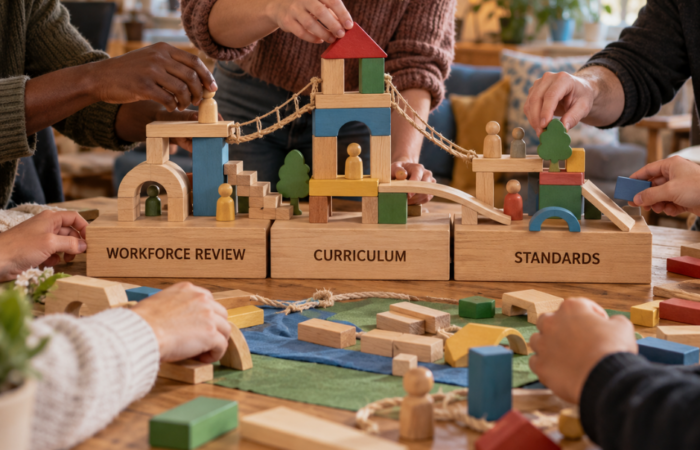
Meet Nell and Arthur – the first 2 characters in the graphic novel coming next…
Is there a sociology of residential child care?
The NCERCC sociology of residential child care team are forming and one of their discussions has been this question.
Is there a sociology of residential child care in its own right?
Where a distinct sociology of residential child care exists it largely functions as an active intersection between the sociology of the family, institutional sociology, childhood studies, social work, and social policy.
While much of the early literature on residential child care was dominated by psychological frameworks (like attachment theory or psychodynamics), sociologists have increasingly turned their focus to children’s homes, group care settings, and institutions. They study these spaces not just as clinical or therapeutic environments, but as distinct social worlds shaped by power, culture, and structural inequality
Key Analytical Pillars of the Field
Sociological inquiry into residential child care typically centres on several key themes:
- The Intersection of Home and Workplace
A primary focus of residential child care sociology is the inherent paradox of a space that must simultaneously function as a professional workplace for staff and a private “homeplace” for children.
- Sociologists examine how institutional regulations, shift patterns, and bureaucratic compliance clip or conflict with the organic creation of an authentic “home”.
- This theme heavily draws on therapeutic child care and social pedagogy frames, which explicitly treats daily life, shared living spaces, and mundane activities (like cooking or playing) as vital tools for growth and development. .
- Reconceptualising Kinship and the “Family Metaphor”
Sociological views of the family have shifted from strict biological definitions toward “family practices” (what families do, rather than what they are). In this frame residential care
- Researchers look at how children in residential homes construct alternative kinship networks.
- Studies show that children can create and use affectionate ‘kin-like’ terms to describe children staff, creating emotional connections outside of traditional blood ties.
- The Sociology of Fear and Detached Professionalism
Modern institutional child care is heavily analysed through the lens of risk society and the sociology of fear.
- Resulting from learning from historical cases of abuse contemporary residential child care is highly regulated.
- Some studies have highlighted the resulting creation of a professionally protective “culture of fear” adopting an detached, objective stance to protect themselves. Sociologists point to how having such a structural defensiveness imposed from outside of the caring relationship can act to adversely affect vulnerable children by diminishing the genuine affection they need to develop. It is recognised as a source of cognitive dissonance for staff.
- Peer Cultures and Identity Formation
Instead of viewing children solely as passive recipients of care, sociologists position children as active social agents. Fieldwork in this area heavily utilises ethnography to observe how children build their own internal hierarchies and peer subcultures as survival strategies
- Social Disadvantage and Class Reproduction
Sociologists analyse residential child care as a mechanism embedded within larger structural inequalities. In many Western nations, the vast majority of children entering residential placements come from highly marginalised socioeconomic backgrounds. Sociologists look at how the state functions as a “parent” and whether care settings unconsciously replicate class-based disadvantages, continuing rather than intervening in the trajectory of poorer educational and criminal justice outcomes.
A definitive text that actively critiques the overly procedural, risk-averse regulation of modern children’s homes, arguing instead for a framework rooted in care, relationship-building, and upbringing. [1, 2, 3]
Related Posts