...accepting we, still, don’t know as much as we think we do accept that we,…

Micro moments are magic moments
“It is not found in grand gestures, but in the micro moments of care, calm, and connection”.
Isn’t this a great insight – and quote? Thanks Megan Smith from Australian Childhood Foundation
NCERCC came across in as part of our global observation of all things Residential Child Care. It opens this article: Finding hope in youth detention through micro moments of care and connection https://learn.childhood.org.au/finding-hope-in-youth-detention
It is not only for those working or with an interested in youth detention. NCERCC has made some small edits to make directly relevant to children’s homes. It was such good writing that we wanted to bring it to you as original as possible.
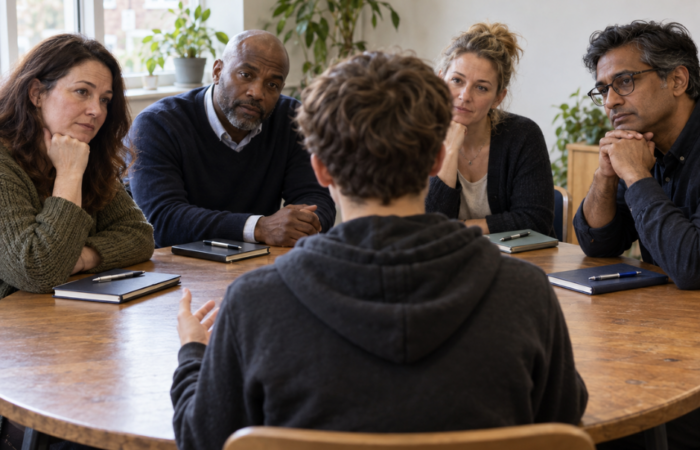
Megan directs our attention to the small relational moments, what Deb Dana calls micro moments, that hold the potential to transform the climate of a setting and the collective nervous system of everyone inside it.
These moments exist everywhere.
The collective nervous system
Drawing on the work of Deb Dana and her application of polyvagal theory, Megan explains regulation of ourselves (do you use this term, it is becoming very well used. Does NCERCC need to do a briefing? ) is understood not as an individual act but as something co-created through connection. Dana speaks of the “collective nervous system,” emphasising how the physiological states of those within an environment, that is a children’s home, continuously shape one another.
Megan uses analogies NCERCC uses in describing “staff and young people are engaged in a constant relational dance where cues of stress, threat, or safety ripple through the collective body…”
The important point is made, “Regulation is not something we ask of young people; it is a shared process scaffolded by connection between the young person, the (primary care giver) and the wider (setting) environment.” (brackets by NCERCC adapting wording).
Trauma informed approaches are becoming very common so readers will perhaps know already that “young people who have experienced complex trauma, their nervous systems are primed for protection rather than connection. Hypervigilance, the 6 F’s (fight, flight, freeze, fawn, fidget, flirt – more coming!), or collapse responses … are not acts of defiance but survival responses learned through repeated experiences of harm, instability or neglects. These young people have learned that relationships can be unreliable, harmful or absent, creating push-pull dynamics as they navigate how to stay protected and still have their needs met.”
Reframing their actions means understanding the origins.
The power of micro moments
“In this context, moments of calm, predictability, and attuned relational presence become critical opportunities for healing. Dana’s concept of micro moments can support staff and systems to continue to look for hope within the dysregulation and acts as a tool for finding opportunities to shift a collective nervous system to begin to move closer to regulation and healing. Dana reminds us: “Extended periods of regulation aren’t necessary to create new patterns. Micro-moments accumulate and shape our biology. They are fundamental to becoming a more regulated human and system.” – Deb Dana”
These micro moments are not abstract ideas; they are concrete acts that can be woven into everyday practice. Examples include:
- Pausing before responding when a young person becomes agitated, allowing space for emotional expression instead of confrontation.
- Using reflective statements like “I can see you’re upset; I’m here and im listening” during tense moments to signal safety and presence.
- Finding everyday opportunities to offer care and nurture such as making a young person a comforting hot drink after a challenging phone call they’ve had with a family member or friend.
- Creating structured check-ins during transitions such as mealtimes, lockdowns, or classroom changes that offer predictability and connection.
- Modelling a return to regulation through a steady tone, deep slow breathing, or grounded open posture in times of distress.
- Looking for opportunities for the young person to take the lead and feel in control through playful interactions. Such as letting a young person teach you their game play of a card game you’ve played too many times to count.
- Acknowledging repair after conflict by saying, “That got heated earlier. I want to make sure you’re okay now.
These small acts signal safety, invite reciprocity, and when repeated over time slowly widen the “window of tolerance” of all people within the centre. They also interrupt the cycle of escalation. By intentionally attending to these micro moments, staff can transform routine interactions into seeds of relational repair and create healing opportunities.
The parallel process – staff wellbeing
The state of the adults inevitably shapes the experience of young people. Dysregulation in staff can heighten distress, while calm, grounded responses can offer a pathway back to safety. This parallel process means that staff are not immune to the impacts of working with trauma; the intensity of young people’s experiences can echo in their own systems.
Just as we look for micro moments of regulation to support young people, it is vital that staff find these moments with and for each other. Acts of attunement, kindness, and shared regulation among colleagues sustain their capacity to respond in ways that are connected, compassionate, and flexible. Structured opportunities for reflection, supervision, peer support, and debriefing further enable staff to replenish and regulate together, ensuring the ongoing sustainability of this work.
A culture of hope
The texture of everyday relationships matters, repeated, small, safe encounters layered moment upon moment that encourage the collective nervous systems to move toward finding safety again, and young people can begin to imagine new ways of being in the world.
When staff slow down, notice and respond with presence, they make it possible for young people to experience safety in relationships, perhaps for the first time. In those moments, hope begins to return, not as an idea, but as a felt sense in the body.
Just wonderful Megan. Connecting. Communicating. Thanks on behalf of everyone
And a closing observation…
Residential Child Care is international. We need to find ways of bringing the learning from around the world to each home.
Related Posts