...accepting we, still, don’t know as much as we think we do accept that we,…
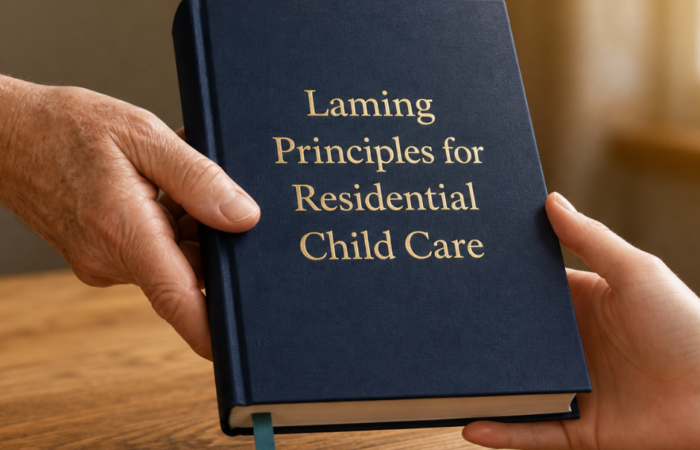
Taking forwards Lord Laming’s legacy through ‘Laming Principles for Residential Child Care’
To take forwards his legacy NCERCC has distilled a set of ‘Laming Principles for Residential Child Care’. As with the man they are strategically rigorous and emotionally mobilising.
They are the core principles extracted from his inquiries, inspection leadership, and policy reforms distilled to a set of actionable commitments care environments.
The Laming Principles for Residential Child Care
- Safety Is Non‑Negotiable
Every child must be protected through clear, accountable, and consistently applied safeguarding practices. Safety is not a bureaucratic exercise, it is the foundation of dignity, trust, and care.
Commitments:
- Zero tolerance for unsafe cultures or punitive practices
- Immediate escalation of concerns
- Transparent recording and oversight
- Multi‑agency cooperation as a daily discipline, not an emergency response
- Children’s Homes Must Be Places of Care, Not Containment
Residential care must be therapeutic, relational, and rooted in children’s rights — never institutional, punitive, or compliance‑driven.
Commitments:
- Replace control‑based cultures with relational practice
- Prioritise emotional safety, belonging, and stability
- Ensure children’s voices shape daily life and long‑term planning
Skilled, Supported, and Supervised Staff Are the Heart of Quality
Laming repeatedly identified poor training, weak supervision, and low morale as drivers of harm. A home is only as safe as the people working within it.
Commitments:
- High‑quality, continuous training
- Reflective supervision as a protected right
- Professional recognition of residential care as skilled social pedagogy
- Workforce wellbeing as a safeguarding issue
- Accountability Must Be Real, Visible, and Shared
Failures in residential care often stem from unclear responsibility, siloed decision‑making, and institutional drift.
Commitments:
- Clear lines of accountability at every level
- Leaders who are present, visible, and responsible
- Inspection and oversight that prioritise lived experience over paperwork
- Collective responsibility across agencies — no child falls between systems
- Decisions Must Be Evidence‑Based, Child‑Centred, and Transparent
Laming’s inquiries exposed decisions made on assumption, habit, or organisational convenience. Residential care must be grounded in evidence, not tradition.
Commitments:
- Decisions justified by clear reasoning and recorded evidence
- Risk assessments that are dynamic, not static
- Children and families involved meaningfully in decision-making
- Transparency as a safeguard against drift and neglect
- Inter‑Agency Cooperation Is a Daily Practice, Not a Crisis Response
Laming’s work showed that children are harmed when agencies fail to communicate. Residential homes must be hubs of coordinated care.
Commitments:
- Shared information, shared responsibility
- Regular multi‑agency meetings
- Joint training and shared safeguarding language
- No professional works in isolation
- Systems Must Learn from — Not Repeat — Their Mistakes
Laming’s inquiries emphasised organisational learning as the antidote to systemic failure.
Commitments:
- Open learning cultures
- Rapid review of incidents
- Continuous improvement built into daily practice
- Learning shared across the sector, not trapped within organisations
- Children’s Rights and Dignity Are the Moral Centre of Residential Care
Every principle ultimately returns to this: Residential care must honour the humanity, agency, and future of every child.
Commitments:
- Rights‑based practice
- Respect, dignity, and compassion
- Children treated as citizens, not cases
- Care that builds futures, not just manages risks
We commit to residential child care that is safe, relational, skilled, accountable, evidence‑based, cooperative, learning‑driven, and rooted in children’s rights.
We reject punitive cultures, institutional drift, and siloed systems.
We build homes where children are protected, respected, and empowered — and where staff are valued, supported, and trusted.
This is the Laming legacy transformed into a cooperative future.
Related Posts