...accepting we, still, don’t know as much as we think we do accept that we,…

Nuffield Family Justice Observatory urges a new ecosystem of care
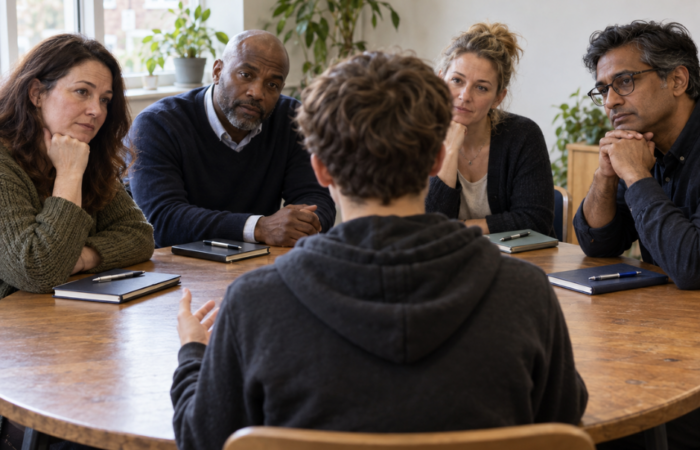
For over a year, the Nuffield Family Justice Observatory have convened a peer collaborative focussed on sharing insights about how children in complex situations are cared for.
What is the issue the NFJO see?
The multiple, intersecting needs of children in complex situations are currently not being recognised or responded to adequately by children’s social care and mental health services, despite children’s long histories with them and the best intentions of the professionals involved. Delayed support can lead to escalation and crisis – and serious concerns about the levels of risk or harm.
Efforts to keep children safe when they have reached this point can include depriving them of their liberty, with a focus on managing immediate, short-term risks rather than providing recovery and opportunities to thrive in the long term. But placement options are limited, and if children are deprived of their liberty under the inherent jurisdiction of the high court they can be placed in unregulated and often unsuitable secure settings.
The group helped to develop a case for change and a vision for a new ecosystem of care.
Five learning points
#1 The children aren’t ‘complex’ – the services and systems are We regard children and their needs as ‘complex’ – but the reality is that services and systems have failed to meet their multiple, intersecting needs.
#2 At crisis points, care is even less effective As a child’s distress increases and a point of crisis is reached, services become less able to respond effectively – and children are less likely to be involved in decisions, listened to or heard.
#3 Services struggle to flex Professionals are often constrained by service pathways, practice and culture – this can lead to mechanistic responses that prevent children from accessing the tailored care they need.
#4 Short-term decisions to keep children safe can cause long-term harm A preoccupation with eliminating risk can disconnect children from important relationships and their communities.
#5 The ‘system’ can make things worse for children, not better Overwhelmed, stuck and fragmented systems and services can be harmful.
In order to achieve the vision
- a clear signal from national leaders that services can and should work in a more integrated way
- space for local leaders to work on and reach agreement on new ways of working
- dedicated ‘system integrators’ – people who are skilled at connecting professionals and organisations
- a national conversation about how risk is held and tolerated
Read the short reports
Caring for children in complex situations: Five learning points and a case for change
Caring for children in complex situations: Towards a new ecosystem
Lisa Harker Director of NFJO writes
There is an urgent need to reset services for children who are experiencing the greatest vulnerabilities in our society. A new ecosystem of care would put children’s long-term well-being at the centre, with children and their families listened to and involved in decisions. It would mean health, children’s social care, police and education working together to better support them. Children deserve care from professionals who have a full understanding of their needs and circumstances and who can help them to access the treatment and support they need (NCERCC emphasis). Professionals are looking for a clear signal that the government actively supports integrated cross-sector working, and that services can and should be working in this way.”
Reflective space
Questions for evolving systems
- How can we take joint responsibility and agree a way forward?
- Do we need to recognise and unpick differences between agencies? What models can help us navigate disintegration?
- Who can help navigate complexity and broker integration? How can we create capacity to do this?
- How can we co-produce new ways of working (pathways and practices)?
Questions for evolving practice
- Are we prioritising organisational needs over the child?
- Is there a shared understanding of this child? What can be done to create this?
- Will managing short-term risks create risks to the child in the future?
- Are children and families informed and involved? Are their voices shaping practice?
- What is the long-term plan?
Related Posts